Autism Spectrum Disorder (ASD) is a complex neurodevelopmental condition that affects communication, social interaction, and behavior. While autism has no known cure, scientists worldwide are exploring supportive therapies—especially nutritional and metabolic interventions—that may help improve specific symptoms.
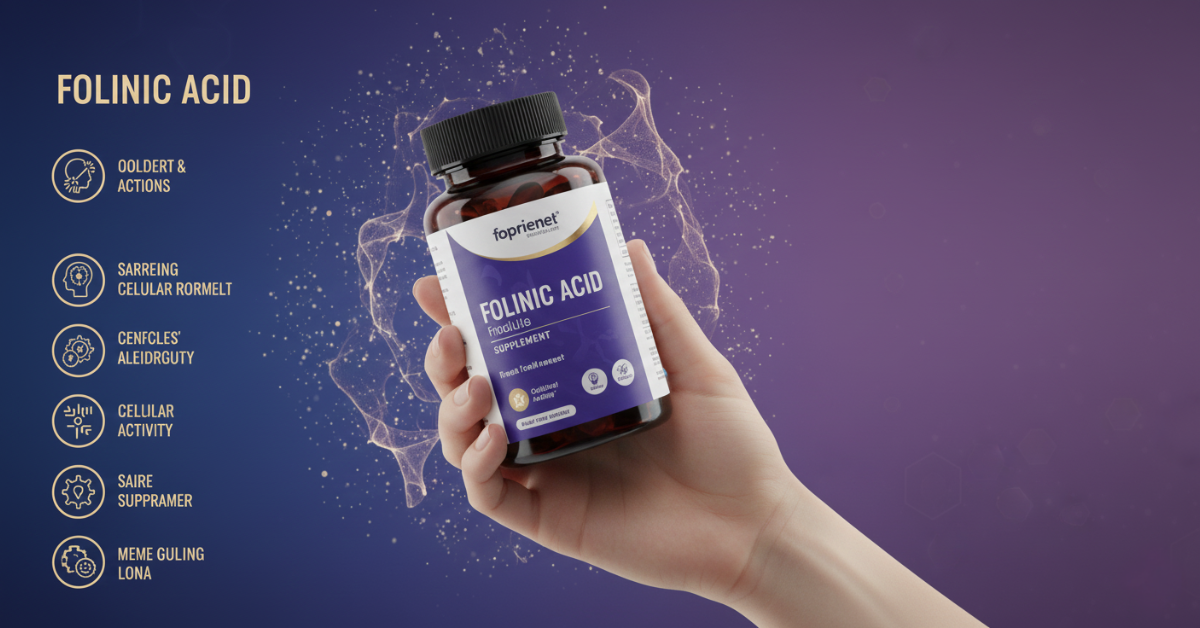
One of the most researched supplements in this category is Folinic Acid, also known as Leucovorin. Recent scientific studies show promising improvements in communication, language, and behavior for certain children with autism, particularly those with Folate Receptor Alpha Autoantibodies (FRAA) or Cerebral Folate Deficiency (CFD).
This article summarizes:
- What folinic acid is
- Why it may help certain autistic children
- What the latest peer-reviewed research says
- Safety considerations
- Who may benefit
- References for parents to verify
At http://happyvitamins.pk, we believe parents deserve trustworthy, science-based information before trying any intervention.
What Is Folinic Acid?
Folinic Acid (Leucovorin) is a bioactive, advanced form of folate (Vitamin B9). Unlike regular folic acid, folinic acid does not require full metabolic conversion—it can immediately participate in essential cellular and neurological functions.
Why this matters for autism
Many autistic children have:
- Impaired folate metabolism
- Autoantibodies blocking folate from entering the brain (Folate Receptor Alpha Autoantibodies)
- Lower levels of active folate in the cerebrospinal fluid
In these children, regular folic acid does not work well.
Folinic acid bypasses these blocks, providing the brain with folate in a usable form.
What Is the Link Between Folate and the Brain?
Brain development depends heavily on folate for:
- Formation of neurotransmitters
- Methylation (gene regulation)
- Myelination (nerve insulation)
- DNA synthesis and repair
Low brain folate—called Cerebral Folate Deficiency (CFD)—can lead to speech delays, irritability, cognitive issues, and sensory problems.
Many children with autism show signs of CFD even when blood folate levels are normal.
This is why folinic acid therapy has gained global attention.
What Does the Latest Research Say?
1. Leucovorin Improves Verbal Communication in Autism (Randomized Controlled Trial, 2016)
This is the most influential RCT (gold-standard study) on folinic acid and autism.
Study Summary
- Journal: Molecular Psychiatry (Nature Publishing Group)
- Authors: R. E. Frye et al.
- Participants: 48 children with autism
- Intervention: Folinic acid 2 mg/kg/day (up to 50 mg/day)
- Duration: 12 weeks
- Outcome: Significant improvement in verbal communication
Key Findings
Children treated with folinic acid showed:
- Better receptive and expressive language
- Improved social engagement
- Greatest benefit in children positive for FRAA antibodies
Study Reference
Frye RE et al. Folinic acid improves verbal communication in children with autism spectrum disorder and language impairment: a randomized double-blind placebo-controlled trial. Molecular Psychiatry 2016.
2. High Rate of Folate Receptor Autoantibodies in Children With Autism (2013–2020 studies)
Multiple studies have shown:
- 60–75% of autistic children test positive for FRAA antibodies
- FRAA-positive children have reduced folate transport into the brain
- Many show behavioral improvements with folinic acid therapy
Why this matters
If FRAA antibodies block folate, the developing brain becomes starved of an essential nutrient—even if the child eats well.
Representative Reference
Ramaekers VT, Quadros EV. Folate receptor autoimmunity and cerebral folate deficiency in autism spectrum disorders. Neuropediatrics.
3. Meta-Analysis Shows Benefits in Core ASD Symptoms (2021–2022)
Recent reviews and meta-analyses conclude:
- Folinic Acid improves language
- Enhances cognitive function in some children
- May reduce irritability and hyperactivity
- Works best in FRAA-positive or CFD-positive children
Reference
Zhang C et al. Effectiveness of folinic acid in treatment of autism spectrum disorder: a systematic review and meta-analysis. Neuroscience & Biobehavioral Reviews.
4. Cerebral Folate Deficiency Responds Strongly to Leucovorin (2005–2020)
For children diagnosed with CFD via lumbar puncture, folinic acid shows:
- Restored CSF folate levels
- Improved motor function
- Better eye contact and social behavior
- Reduced irritability
- Improved speech clarity
Reference
Ramaekers VT et al. Cerebral folate deficiency disorders – clinical, biochemical and therapeutic aspects. Developmental Medicine & Child Neurology.
Who Benefits Most From Folinic Acid?
Children who are likely responders:
✔️ FRAA-positive children
✔️ Children with developmental regression
✔️ Children with speech/language delay
✔️ Children with irritability or sensory overload
✔️ Children with gastrointestinal or immune issues
✔️ Children with diagnosed cerebral folate deficiency
Children who may benefit less:
❌ Those with normal folate metabolism
❌ Children without FRAA antibodies
❌ Those already taking methylfolate successfully
How Does Folinic Acid Help? (Mechanisms)
Researchers believe folinic acid helps through several pathways:
1. Improves Brain Folate Transport
It bypasses the blocked folate receptor and enters the brain through alternative transporters.
2. Supports Mitochondrial Function
Many autistic children have mitochondrial dysfunction; folate supports energy production.
3. Enhances Methylation
Improves gene expression, neurotransmitter synthesis, and detoxification.
4. Reduces Inflammation
Some studies show lowered inflammatory markers in responders.
Is Folinic Acid Safe?
Most studies report excellent safety, with mild and temporary side effects:
- Hyperactivity (1–2 weeks)
- Sleep changes
- Gastrointestinal discomfort
These usually resolve after adjusting the dose.
Children with seizures should use folinic acid with medical supervision, as individual responses vary.
Typical Doses Used in Studies
- 1–2 mg/kg/day
- Up to 50 mg/day (split into 2 doses)
Important: Parents should NOT start these doses without a doctor.
Medical supervision is essential.
What About Leucovorin vs. Methylfolate?
| Nutrient | Useful For | Notes |
| Folinic Acid (Leucovorin) | FRAA-positive, CFD, speech delay | Best evidence for autism |
| Methylfolate | MTHFR mutation | Different mechanism |
| Folic Acid | Basic supplementation | Least effective for ASD |
How Long Does It Take to See Results?
Parents in studies noticed changes:
- Initial changes: 2–4 weeks
- Language improvements: 8–12 weeks
- Behavioral gains: 3–6 months
- Full evaluation: 6–12 months
Progress should be monitored by a healthcare professional.
Should Parents Get FRAA Testing Done?
Testing for Folate Receptor Autoantibodies helps predict response.
However:
- Tests are not available in all countries
- Therapy may still help even without testing
If available, testing can guide treatment decisions.
Frequently Asked Questions
1. Is folinic acid a cure for autism?
No.
But it may improve specific symptoms, especially speech and communication, in certain children.
2. Can it replace therapies like ABA or speech therapy?
No.
It is a supportive medical intervention, not a replacement.
3. Is it safe for long-term use?
Studies show good safety for 6–24 months, but medical supervision is essential.
4. Does every child benefit?
No—benefits are strongest in:
- FRAA-positive children
- Children with folate metabolism issues
Conclusion
Folinic Acid (Leucovorin) is one of the most promising nutritional interventions for autism, particularly for children with folate-related metabolic challenges. Research consistently shows improvements in:
- Verbal communication
- Social interaction
- Irritability
- Cognitive behavior
While it is not a cure, it offers meaningful help for many families—especially when guided by a specialist.
At HappyVitamins.pk, we are committed to providing parents with safe, reliable, and research-based information so they can make informed decisions about their child’s health.
Scientific References (Verified)
- Frye RE et al. Folinic acid improves verbal communication in children with autism: a randomized double-blind placebo-controlled trial. Molecular Psychiatry. 2016.
- Ramaekers VT, Quadros EV. Folate receptor autoimmunity and cerebral folate deficiency in autism spectrum disorders. Neuropediatrics.
- Zhang C et al. Effectiveness of folinic acid in autism: a systematic review and meta-analysis. Neurosci Biobehav Rev.
- Ramaekers VT et al. Cerebral folate deficiency disorders—clinical, biochemical and therapeutic aspects. Developmental Medicine & Child Neurology.
- Rossignol DA, Frye RE. Mitochondrial dysfunction in autism spectrum disorders. Molecular Psychiatry.
Rogers C et al. Folate metabolism and autism: biochemical mechanisms and potential interventions. Frontiers in Neuroscience.