








Autism Spectrum Disorder (ASD) is a complicated neurodevelopmental disorder that makes it hard to talk, connect with others, and behave. Scientists all across the world are looking on supportive therapies, especially nutritional and metabolic ones, that might help with certain symptoms of autism. There is no recognised cure for autism.
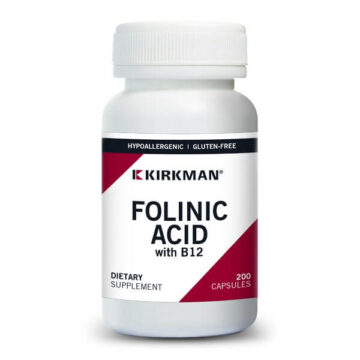
Folinic Acid, which is also known as Leucovorin, is one of the most studied supplements in this group. Recent scientific research indicates significant enhancements in communication, language, and behaviour among specific children with autism, notably those exhibiting Folate Receptor Alpha Autoantibodies (FRAA) or Cerebral Folate Deficiency (CFD).
This page gives a brief overview of folinic acid.
- Why it might help some kids with autism
- What the most recent peer-reviewed studies indicate
- Things to think about for safety
- Who could gain from this
- References for parents to check
We think that parents should get reliable, science-based information before trying any intervention at http://happyvitamins.pk.
What is folinic acid?
Folinic Acid (Leucovorin) is a more advanced and functional version of folate (Vitamin B9). Folinic acid doesn’t need to go through a full metabolic conversion like conventional folic acid does. It can start doing important cellular and neurological tasks right away.
Why this is important for autism
A lot of kids with autism have:
- Impaired folate metabolism
- Autoantibodies that prevent folate from entering the brain (Folate Receptor Alpha Autoantibodies)
- Reduced concentrations of active folate in the cerebrospinal fluid.
- Regular folic acid doesn’t function well for these kids.
Folinic acid goes over these blockages and gives the brain folate in a form that it can use.
What does folate have to do with the brain?
Folate is very important for brain development because it:
- Making neurotransmitters
- Gene regulation via methylation
- Insulation of nerves through myelination
- Making and fixing DNA
Cerebral Folate Deficiency (CFD) is when the brain doesn’t have enough folate. This can cause speech delays, irritability, cognitive impairments, and sensory problems.
Many kids with autism show indications of CFD even when their blood folate levels are normal.
This is why people all around the world are interested in folinic acid therapy.
What Does the Most Recent Research Say?
1. Leucovorin Enhances Verbal Communication in Autism (Randomised Controlled Trial, 2016)
This is the most important RCT (gold-standard study) on folinic acid and autism.
Study Summary Journal:
- Molecular Psychiatry (Nature Publishing Group)
- Writers: R. E. Frye and others
- Participants: 48 autistic children
- Intervention: Folinic acid 2 mg/kg/day (up to 50 mg/day)
- For 12 weeks
- Result: Big improvement in how well you talk to people
Important Results
- Kids who got folinic acid showed:
- Better receptive and expressive language, as well as more social participation.
- The most advantage for children who are positive for FRAA antibodies
- Reference for the Study
Frye RE et al. Folinic acid enhances verbal communication in children with autism spectrum disorder and language impairment: a randomised double-blind placebo-controlled experiment. Molecular Psychiatry 2016.
2. Elevated Prevalence of Folate Receptor Autoantibodies in Autistic Children (2013–2020 Studies)
Numerous investigations have demonstrated:
- 60–75% of children with autism test positive for FRAA antibodies.
- FRAA-positive children exhibit diminished folate transport into the brain.
- Numerous individuals exhibit behavioural enhancements with folinic acid medication.
- Why this is important
- If FRAA antibodies stop folate from getting to the brain, it won’t get enough of this important nutrient, even if the child eats properly.
- Reference for Representatives
Ramaekers VT and Quadros EV. Autoimmunidad del receptor de folato y deficiencia cerebral de folato in trastornos del espectro autista. Neuropediatrics.
3. Meta-Analysis Demonstrates Advantages in Fundamental ASD Symptoms (2021–2022)
Recent reviews and meta-analyses indicate:
- Folinic acid helps with language and makes certain kids’ brains work better.
- Could help with impatience and hyperactivity
- Works best in kids who are FRAA-positive or CFD-positive
- Reference
Zhang C et al. The efficacy of folinic acid in the treatment of autism spectrum disorder: a systematic review and meta-analysis. Neuroscience and Biobehavioral Reviews.
4. Cerebral Folate Deficiency Exhibits Significant Responsiveness to Leucovorin (2005–2020)
For children diagnosed with CFD through lumbar puncture, folinic acid demonstrates:
- Re-established folate levels in CSF
- Better motor function
- Better eye contact and behaviour in social situations
- Less irritable
- Clearer speech
Reference
Ramaekers VT and others Cerebral folate insufficiency disorders: clinical, biochemical, and therapeutic dimensions. Child Neurology and Developmental Medicine.
Who Gets the Most Out of Folinic Acid?
Kids who are likely to respond:
✔️ Kids who are FRAA-positive
✔️ Kids who are having trouble with speech or language
✔️ Kids who are irritable or have too much sensory input
✔️ Kids who have stomach or immunological problems
✔️ Kids who have been diagnosed with cerebral folate deficiency
Kids who might not benefit as much:
❌ People whose folate metabolism is normal Kids that don’t have FRAA antibodies
❌ People who are already taking methylfolate and doing well
How can folinic acid help? (How it works)
Researchers think that folinic acid benefits in a number of ways:
1. Helps move folate around in the brain
It goes around the inhibited folate receptor and into the brain through other transporters.
2. Helps Mitochondrial Function
A lot of kids with autism have problems with their mitochondria, and folate helps make energy.
3. Boosts Methylation
Enhances gene expression, neurotransmitter production, and detoxification.
4. Lowers Inflammation
Some studies demonstrate that responders had reduced levels of inflammatory markers.
Folinic Acid Safe?
Most studies say that the drug is very safe and only causes moderate and short-term negative effects:
- Hyperactivity (1–2 weeks)
- Changes in sleep
- Discomfort in the stomach and intestines
These normally go away after changing the dose.
- Children who have seizures should take folinic acid under the care of a doctor because everyone reacts differently.
- Common Doses Utilised in Research
- 1–2 mg/kg/day
- Up to 50 mg a day, divided into two doses
Important: Parents should not give these doses without first talking to a doctor.
- Medical supervision is very important.
- What about methylfolate and leucovorin?
- Nutrient Useful For Notes
- Leucovorin (Folinic Acid)
- FRAA-positive, CFD, and speech delay
- The best proof of autism
- Methylfolate MTHFR mutation
- Different way
- Folic Acid Basic supplements
- Not really helpful for ASD
How long does it take to see results?
Parents in studies saw changes:
- Changes that happen at first: 2–4 weeks
- Language improvements: 8–12 weeks
- Behavioural improvements: 3 to 6 months
- Full evaluation: 6 to 12 months
A healthcare provider should keep an eye on progress.
Should Parents Get FRAA Testing?
- Folate Receptor Testing Autoantibodies can help you guess how someone will respond.
- But: Not all countries have tests available
- Therapy may still be beneficial even in the absence of testing.
- Testing can help make judgements about therapy if it is accessible.
Questions That Are Commonly Asked
1. Can folinic acid cure autism?
No.
But it might help some kids with particular symptoms, like speech and communication.
2. Is it possible for it to take the place of therapies like ABA or speech therapy?
No.
It is not a replacement; it is a medical intervention that helps.
3. Is it safe to use for a long time?
Research indicates a favourable safety profile for ages 6 to 24 months; nonetheless, physician oversight is crucial.
4. Do all kids benefit?
No—benefits are strongest in: children who are FRAA-positive
Kids that have trouble with folate metabolism
Conclusion
Folinic Acid (Leucovorin) is one of the most promising dietary treatments for autism, especially for kids who have trouble with folate metabolism. Studies typically demonstrate enhancements in:
- Talking to each other
- Interacting with others
- Being irritable
- Cognitive behaviour
It doesn’t cure anything, but it can benefit a lot of families, especially when a professional is in charge.
We at HappyVitamins.pk are dedicated to giving parents safe, trustworthy, and research-based information so they may make smart choices regarding their child’s health.
Verified Scientific References
- Frye RE et al. Folinic acid enhances verbal communication in children with autism: a randomised double-blind placebo-controlled experiment. Molecular Psychiatry. 2016.
- Ramaekers VT, Quadros EV. Autoimmunidad del receptor de folato y deficiencia cerebral de folato in trastornos del espectro autista. Neuropediatrics.
- Zhang C et al. The efficacy of folinic acid in autism: a systematic review and meta-analysis. Neurosci Biobehav Rev.
- Ramaekers VT et al. Cerebral folate deficiency disorders—clinical, biochemical, and therapeutic dimensions. Child Neurology and Developmental Medicine.
- Rossignol DA, Frye RE. Mitochondrial malfunction in autism spectrum diseases. Psychiatry at the Molecular Level